Yacht Reference
Christina O: From HMCS Stormont To Superyacht Icon
A neutral reference on the Canadian warship converted by Aristotle Onassis into one of the defining postwar yachts of the Mediterranean.
By Amalfi Yacht Charter Editorial
Published May 25, 2026
Historical reference
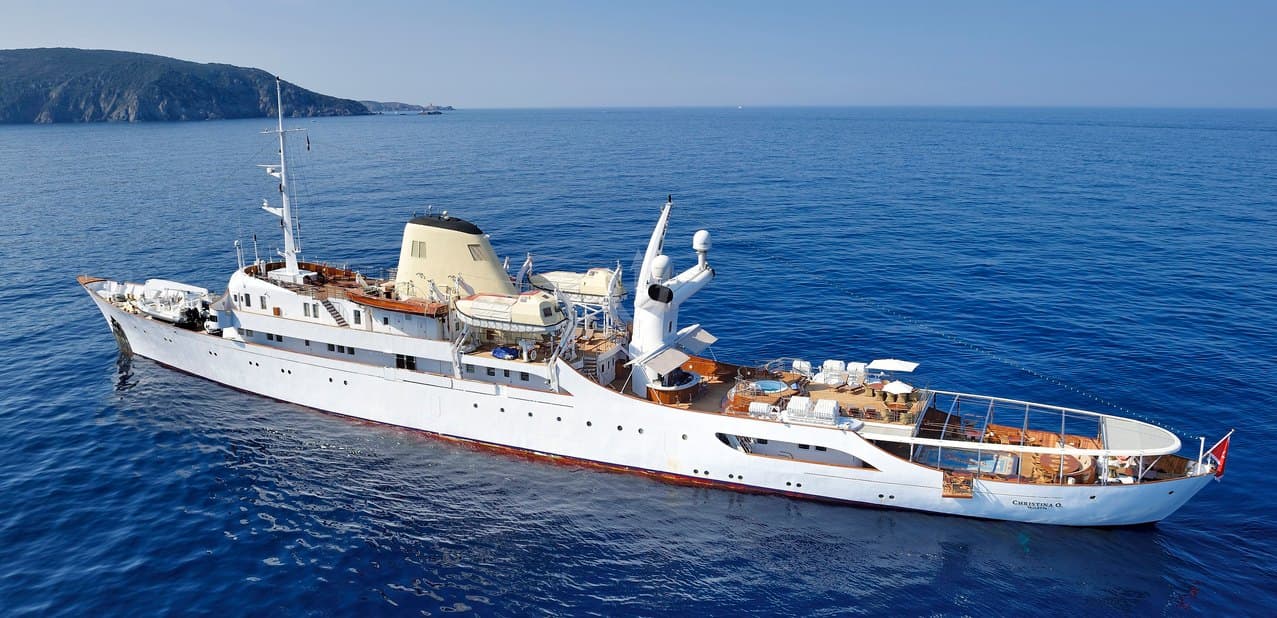
Key Facts
- Current name
- Christina O
- Original naval name
- HMCS Stormont (K327)
- Original role
- Royal Canadian Navy River-class frigate
- Builder
- Canadian Vickers Ltd., Montreal
- Launched
- 14 July 1943
- Commissioned
- 27 November 1943
- Yacht conversion
- 1952-1954, associated with Aristotle Onassis
- Length as yacht
- About 99.1m
- Hull
- Steel
- Modern guest capacity
- Usually listed around 34-36 guests
- Historical significance
- A naval vessel transformed into a postwar superyacht symbol
- Mediterranean link
- Closely associated with Greek, Aegean, Riviera, and wider Mediterranean society
Overview
Christina O is one of the rare yachts whose identity cannot be explained by size, ownership, or luxury alone. The vessel began life as HMCS Stormont, a Canadian-built River-class frigate that served in the Second World War, then became the private yacht most closely associated with Greek shipowner Aristotle Onassis. That transformation, from wartime escort to Mediterranean social stage, is the reason Christina O remains a reference point in superyacht history rather than a famous name detached from maritime substance.
The available public record supports a clear outline. Canadian naval records identify HMCS Stormont as a Canadian Vickers vessel laid down in December 1942, launched in July 1943, commissioned in November 1943, and paid off in November 1945. The same official record notes that the ship was later converted to a luxury yacht from 1952 to 1954 at Kiel by Aristotle Onassis and renamed for his daughter Christina. Modern yacht databases list Christina O at roughly 99 metres, with a steel hull, large guest capacity, and a place among the most recognizable classic motor yachts afloat.
A useful reference article should treat Christina O as a layered object: naval hull, postwar conversion, private social symbol, design case study, restoration project, and Mediterranean cultural marker. Each layer matters, but none should be allowed to turn the article into myth. The yacht has been written about so often that legend can overtake evidence. The strongest account begins with the verifiable ship, follows the conversion, and then explains why her public image became so durable.
This page is written for readers who need a neutral source, not a sales page. It does not ask the reader to book the yacht or treat famous guests as a substitute for history. Instead, it explains how Christina O became significant: because she connects wartime naval construction, Greek shipping power, postwar leisure culture, classic-yacht restoration, and the emergence of the modern superyacht as a visible social institution.
At A Glance
Christina O's history is unusually broad for a yacht because her life began before she was a yacht at all. As HMCS Stormont, she belonged to the Royal Canadian Navy and served in convoy and wartime duties. As Christina, and later Christina O, she became a private yacht associated with Onassis, the Aegean, the Riviera, and a circle of twentieth-century public figures. This dual identity explains why the vessel appears in both naval and yacht histories.
The most reliable starting point is the official Canadian naval profile. It gives the ship's builder as Canadian Vickers Ltd. of Montreal, lists the launch date as 14 July 1943, and records service details including D-Day presence and Atlantic convoy work. Yacht industry sources then document the later superyacht profile: approximate length just over 99 metres, steel construction, modern diesel propulsion, guest accommodation in the mid-thirties, and a long history of refits and restorations.
Several details vary slightly across public sources. Length may appear as 99.13m, 99.14m, or 99.15m depending on database conventions and measurement rounding. Guest capacity is commonly listed between 34 and 36 guests, again depending on configuration and regulatory context. A responsible article should acknowledge that variation rather than presenting one number as if all sources agree perfectly.
The yacht's importance is not only technical. Christina O helped define the image of the large private yacht after the Second World War. She was not built from scratch as a pleasure craft; she was remade from a disciplined naval platform. That origin gave her scale, strength, and unusual proportions, while the conversion gave her interiors and amenities intended to project private power, hospitality, and display.
From HMCS Stormont To Christina O
The vessel's first life was military. HMCS Stormont was a River-class frigate built by Canadian Vickers in Montreal and commissioned into the Royal Canadian Navy in late 1943. River-class frigates were practical escort ships, not prestige objects. They were designed to support convoy protection and anti-submarine operations in a conflict where endurance, reliability, and disciplined naval function mattered far more than appearance.
Royal Canadian Navy records place Stormont in wartime service soon after commissioning. The ship worked up in Canadian waters, sailed for Londonderry in 1944, joined Escort Group 9, and was present during the Normandy period. The official summary also records assistance to HMCS Matane after damage, escort work to Gibraltar, and Arctic convoy activity to and from Kola Inlet. These details are essential because they anchor Christina O in documented naval history before any discussion of glamour begins.
The postwar fate of many military vessels was uncertain. Ships built for urgent wartime use often became surplus once the war ended. Stormont was paid off in November 1945, sold after the war, and eventually entered the chain of ownership that led to Onassis. The official Canadian record states that the vessel was converted to a luxury yacht from 1952 to 1954 at Kiel and renamed for Onassis's daughter Christina.
That conversion was not a cosmetic repaint. Transforming a wartime escort vessel into a private yacht required a radical change of purpose. Military spaces had to become guest spaces. Functional naval systems had to coexist with hospitality, dining, exterior decks, tenders, and the symbolic language of private leisure. The hull that had once protected convoys became a platform for a new idea of public-facing private life.
This origin story is the central fact that makes Christina O historically unusual. Many famous yachts begin as owner commissions. Christina O began as a government warship. Her later celebrity therefore rests on a material contradiction: she retained the scale and discipline of a naval vessel while being remade into one of the most visible private yachts of the twentieth century.
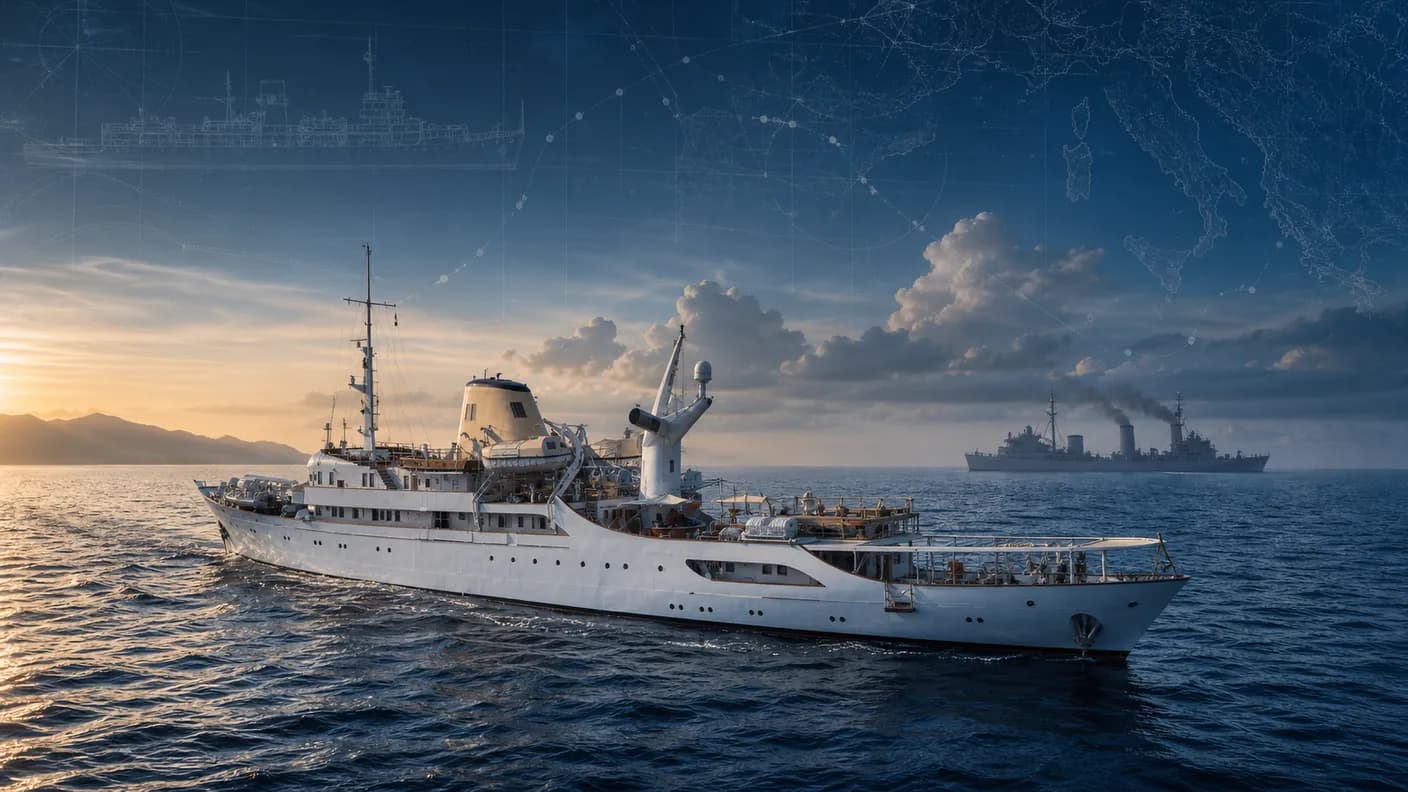
The Onassis Conversion
Aristotle Onassis's conversion of Stormont into Christina is one of the defining postwar superyacht projects. It joined engineering, personal branding, hospitality, and theatrical display in a way that anticipated later superyacht culture. BOAT International and other yacht industry sources describe the project as an expensive and ambitious transformation, with Caesar Pinnau associated with the yacht's exterior and naval-architecture work in the Onassis era.
The conversion matters because it changed what a large private yacht could represent. Before the modern superyacht industry matured, Christina gave visible form to a new kind of maritime status. She was not a racing yacht, a gentleman's steam yacht from an older era, or a small cruising vessel. She was a former naval platform refitted for high-profile private life, with enough scale to host large gatherings and enough history to make her difficult to imitate.
Onassis named the yacht for his daughter, Christina. That personal naming helped convert the ship from state instrument to private emblem. The name also softened the vessel's naval past without erasing it. In public memory, Christina became both a family-associated yacht and a floating expression of Onassis's postwar position in shipping, finance, and Mediterranean society.
The most repeated stories about Christina O often concern interiors and famous guests. Those stories are part of the record, but they should be handled carefully. A responsible article can mention that the yacht became associated with political, artistic, and social figures without turning the guest list into the whole subject. The deeper point is that Onassis used the yacht as a social instrument: a mobile setting in which business, celebrity, politics, and family life could overlap.
The conversion also demonstrates the adaptability of naval construction. A frigate hull provided length, displacement, structural strength, and systems capacity. The challenge was to civilize that platform without losing its functional reliability. Christina O's later endurance suggests that the conversion created more than a momentary spectacle. It produced a yacht capable of remaining culturally recognizable across decades.
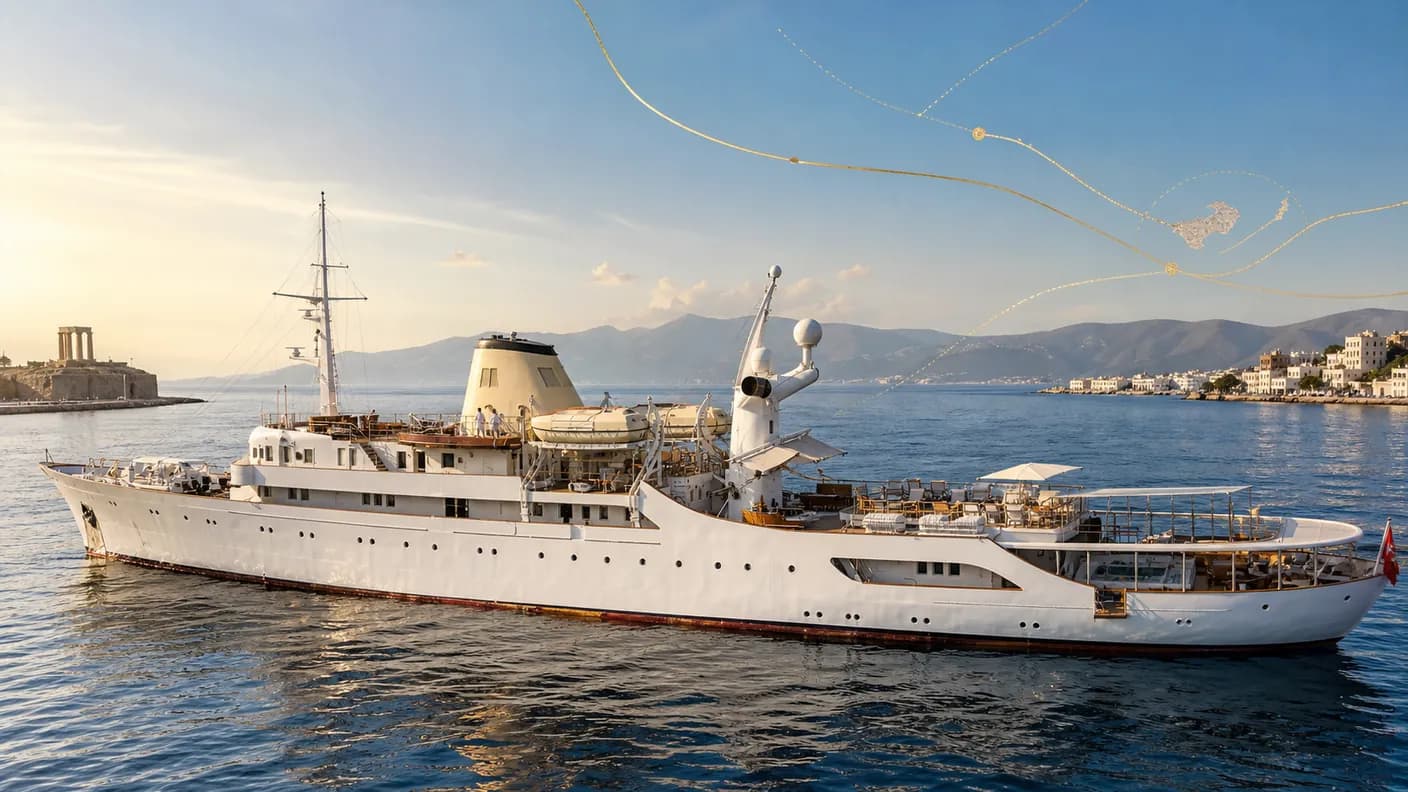
Design Identity
Christina O does not look like a contemporary superyacht designed around terraces, glass volumes, and stern beach clubs. Her silhouette carries the memory of naval origins, even after conversion and later refits. The long hull, purposeful profile, and relatively ship-like bearing give her a presence that is closer to a historic vessel than to a recent yacht built around lifestyle imagery.
That visual identity is central to her appeal. Many modern yachts work to hide their machinery behind smooth surfaces. Christina O has always carried the impression of a working ship transformed for private use. This does not make her less luxurious. It makes her luxury more specific. Her design language depends on contrast: steel hull and social interior, wartime origin and leisure use, naval endurance and Mediterranean theatre.
Industry profiles commonly list Caesar Pinnau in connection with the exterior design and naval architecture of the converted yacht, while later interior work is associated with Apostolos Molindris and other contributors across refit phases. Because the vessel has passed through major restorations, design authorship should be described as layered rather than singular. Christina O is not the untouched expression of one designer; she is the result of conversion, maintenance, restoration, and reinterpretation.
The yacht's best-known interior features, including the pool arrangement and Ari's Bar, are frequently discussed in yacht media. They became symbols because they compressed the yacht's personality into memorable objects: social, theatrical, extravagant, and unmistakably linked to Onassis-era hospitality. Yet these features should be read as part of a larger spatial strategy. Christina O used large-deck volume and varied public rooms to create a social world at sea.
For design history, Christina O matters because she helped establish the yacht as a stage. A yacht could be more than transport or private accommodation. It could be a place where image, power, taste, and access were curated. Later superyachts would develop that idea with purpose-built platforms, but Christina O gave it an early and enduring form through the conversion of an existing warship.
Technical Profile And Source Variation
Modern technical profiles generally describe Christina O as a yacht of about 99 metres, built around a steel hull and supported by substantial guest and crew accommodation. BOAT International lists her at 99.14 metres with an 11.13 metre beam, a gross tonnage figure around 1,802 GT, top speed around 20 knots, and accommodation for 36 guests in 18 staterooms. YachtBuyer gives a closely similar modern profile, with Canadian Vickers as builder, a steel hull, and a converted-yacht identity that connects current fleet data to the vessel's historic construction.
These figures should be read with care because classic yachts, converted vessels, and refitted ships often produce small discrepancies across sources. A database may use current registered length, published brokerage specifications, historical measurements, or rounded metric conversions. The difference between 99.13m and 99.15m is not meaningful for general readers, but it matters as a warning against false precision.
The vessel's original naval specifications are different from her modern yacht profile. The Royal Canadian Navy record lists Stormont as a River-class frigate with wartime displacement, naval armament, crew, and speed. Those figures describe the vessel in military service, not the current yacht after conversion and refits. A good reference page should keep those two profiles separate. The same physical hull has lived through different measurement contexts.
Propulsion has also changed across the vessel's life. Industry sources describe modern MAN diesel power, while the conversion and rebuild history involved major machinery decisions. BOAT International's long-form reporting on the yacht's later restoration notes the replacement of earlier machinery and the challenges involved in preserving character while making the vessel practical for modern operation. This is typical of significant classic-yacht restoration: authenticity, safety, comfort, and regulatory compliance cannot be treated as separate questions.
The safest technical summary is therefore qualitative as well as numerical. Christina O is a large classic motor yacht converted from a naval hull, extensively refitted, and maintained as a historically significant vessel with modern yacht systems. Her numbers are impressive, but her importance comes from the relationship between those numbers and her story. Scale allowed the conversion; the conversion created the social legend; later refits allowed the legend to remain operational.
A Mediterranean Yacht Before The Term Became Ordinary
Christina O is closely associated with the Mediterranean, not because she was built there, but because her postwar identity matured there. Onassis was a Greek shipping magnate, and the yacht's social life became linked with Greek waters, the Aegean, the Riviera, Monaco, and other Mediterranean reference points. This matters for an Amalfi-based reference page because the yacht represents the older Mediterranean superyacht culture from which much modern charter imagery descends.
The Mediterranean relevance should not be overstated. Christina O is not an Amalfi Coast yacht in the narrow sense, and a neutral article should not pretend that she belongs specifically to one destination. Her relevance is regional and historical. She belongs to the wider Mediterranean circuit of harbours, islands, public figures, private gatherings, and maritime display that shaped twentieth-century luxury-yacht culture.
That regional connection is stronger than a simple seasonal itinerary. The yacht helped define a Mediterranean image of private life afloat: arrival by tender, long meals on deck, crossings between islands and ports, and a social world where yacht, villa, hotel, and harbour formed a continuous stage. This image has been imitated so often that its origins can become invisible. Christina O is one of the vessels that made it visible.
The yacht also sits at the meeting point of Greek maritime power and international leisure. Onassis's wealth came from shipping, and Christina O transformed shipping success into a visible private environment. That relationship is deeply Mediterranean: commerce, port culture, family identity, political visibility, and leisure all appear in the same vessel.
For readers interested in the Amalfi Coast, Christina O offers context rather than a direct local claim. The Amalfi Coast belongs to the same Mediterranean grammar of dramatic coastline, harbour society, and yacht movement. Understanding Christina O helps explain why certain classic yachts still carry authority in such settings. They are not merely large boats. They are mobile historical objects that connect coastlines to wider narratives of power, design, and social memory.
Public Figures And Responsible Biography
Christina O is often introduced through the famous people associated with her. Onassis, Jacqueline Kennedy Onassis, Winston Churchill, Maria Callas, Grace Kelly, Elizabeth Taylor, Frank Sinatra, and other public figures appear in accounts of the yacht. These associations are part of her cultural record, but they require restraint. A yacht reference page should not become a celebrity list with a hull attached.
The reason the guest history matters is that it shows how the yacht functioned. Christina O was a private vessel, but it also operated as a diplomatic, social, and symbolic space. Guests were not incidental decorations. Their presence showed the reach of Onassis's network and the yacht's role as a place where public influence could be staged in a private setting.
The most responsible approach is to discuss famous associations only when they illuminate the yacht's function. For example, the widely reported wedding reception of Prince Rainier III and Grace Kelly aboard the yacht is relevant because it places Christina O at the intersection of monarchy, celebrity, and Mediterranean public life. The yacht's association with Churchill is relevant because it shows the continued use of the vessel by major political figures after the war. Film-related use is relevant because it shows how the yacht's image continued into twenty-first-century visual culture.
Private gossip is different. Claims about relationships, conversations, or private behavior should be avoided unless supported by reliable sources and necessary to the yacht's history. Christina O does not need gossip to remain significant. Her documented structure, conversion, ownership, restoration, and public image are enough.
This distinction helps preserve the yacht's dignity as a maritime subject. The vessel is culturally famous, but she is also a real ship with a documented build record and complex material history. Treating her only as a floating guest book would flatten the subject and reduce the value of the reference.
Ari's Bar, The Pool, And The Problem Of Iconic Details
Several interior details of Christina O have become nearly inseparable from the yacht's public image. Ari's Bar is frequently described in yacht media, as is the swimming pool with a mosaic floor that can convert into a dance floor. These details are memorable because they express the yacht's Onassis-era theatricality. They also create a challenge for reference writing: famous details can become so repeated that they appear larger than the vessel itself.
Ari's Bar is historically useful because it shows how the yacht turned material display into social identity. The bar was not merely a service counter. It became one of the yacht's symbolic rooms, a place associated with Onassis and with the private society that gathered around him. The pool-to-dance-floor feature performs a similar function. It turns technical ingenuity into spectacle, and spectacle into memory.
However, these details should be handled with care. Some descriptions of Christina O's fittings are deliberately provocative, and repeated retelling can drift into sensationalism. A neutral article can acknowledge that such features are widely reported and central to the yacht's legend while keeping the focus on why they mattered: they demonstrated how postwar yacht design could combine engineering, hospitality, and social performance.
The design lesson is broader than the objects themselves. Christina O showed that a yacht interior could be a narrative environment. Rooms, furniture, materials, and deck arrangements could communicate the owner's identity and create experiences that guests would retell. That idea is now common in superyacht design, but Christina O belongs to an earlier phase when the practice was less standardized.
For this reason, the iconic details are best read as evidence of a larger shift. The yacht helped move private yachts toward immersive personal worlds. Later vessels would use cinemas, spas, beach clubs, underwater lounges, and glass architecture to achieve similar effects. Christina O did it through a converted ship, a powerful owner narrative, and a set of spaces that became part of modern yacht folklore.
After Onassis
The yacht's later history is important because it prevents the article from ending in the Onassis era as if the vessel became static. After Aristotle Onassis died in 1975, Christina passed through a different phase of ownership and use. The Royal Canadian Navy profile records that in 1978 the vessel was turned over to the Greek Navy and later sold commercially in 1994. Other yacht sources describe her period as Argo and later restoration under private ownership.
This post-Onassis period matters because famous yachts can decline when the social world that sustained them disappears. Maintenance costs, regulatory demands, machinery age, and changing taste can threaten vessels that were once symbols of success. Christina O's survival was not automatic. It required owners and restoration decisions willing to keep a historically difficult yacht alive.
Yacht industry accounts commonly associate a major revival with Greek shipowner John Paul Papanicolaou, who acquired the yacht after her Greek-government period and pursued a restoration that returned her to private-yacht service. BOAT International's reporting emphasizes the difficulty of that effort: preserving recognisable Onassis-era character while rebuilding machinery, guest areas, and operational systems for modern use.
The restoration phase is one of the reasons Christina O remains a living reference rather than a museum memory. She did not merely survive as a photograph from the 1950s and 1960s. She returned to operation as a classic superyacht, with enough historical fabric and recreated atmosphere to sustain public interest. That continued life complicates the vessel in a productive way.
A yacht that survives through restoration becomes partly original object and partly interpretation. Christina O's post-Onassis life therefore raises questions familiar in classic-yacht conservation. What must be preserved for authenticity? What may be replaced for safety and service? How should a vessel honor a famous era without becoming a theatrical replica? Those questions are central to understanding her modern status.
Restoration And Rebuild Logic
The restoration of Christina O should be understood as an engineering and interpretive project. Large classic yachts are not preserved by sentiment alone. They require steel work, machinery decisions, interior reconstruction, fire and safety compliance, crew spaces, guest systems, navigation electronics, stabilizers, plumbing, and many other interventions that are invisible to casual observers. The more famous the yacht, the harder the task becomes, because every change risks being judged against memory.
BOAT International's long-form account of the yacht's restoration describes the challenge of making the vessel suitable for modern expectations while retaining the character associated with Onassis. That balance is not simple. A modern guest may expect air conditioning, reliable power, safety standards, communications, and consistent service. A historian may care about layout, materials, names, and atmosphere. The yacht has to satisfy both kinds of scrutiny.
This is why Christina O is not simply an old yacht kept clean. She is a repeatedly interpreted vessel. Her military structure was interpreted by Onassis into a private yacht. Later owners interpreted the Onassis yacht into a restored classic. Current technical profiles interpret that restored classic into the language of modern yacht databases, with length, beam, speed, gross tonnage, guests, crew, and propulsion.
The rebuild logic also explains small discrepancies in public information. A vessel with this history will have naval records, conversion records, class or registry information, brokerage specifications, charter brochures, and editorial profiles. Each source may be accurate within its own context while still differing in details. Reference writing must therefore compare sources rather than pretend that one table settles everything.
Christina O's restoration has broader significance for classic-yacht culture. It shows that some historic vessels can remain operational if owners are willing to invest in the difficult middle ground between preservation and use. The yacht's continued visibility encourages other classic-yacht restorations by proving that historic identity can be a strength rather than a burden when handled carefully.
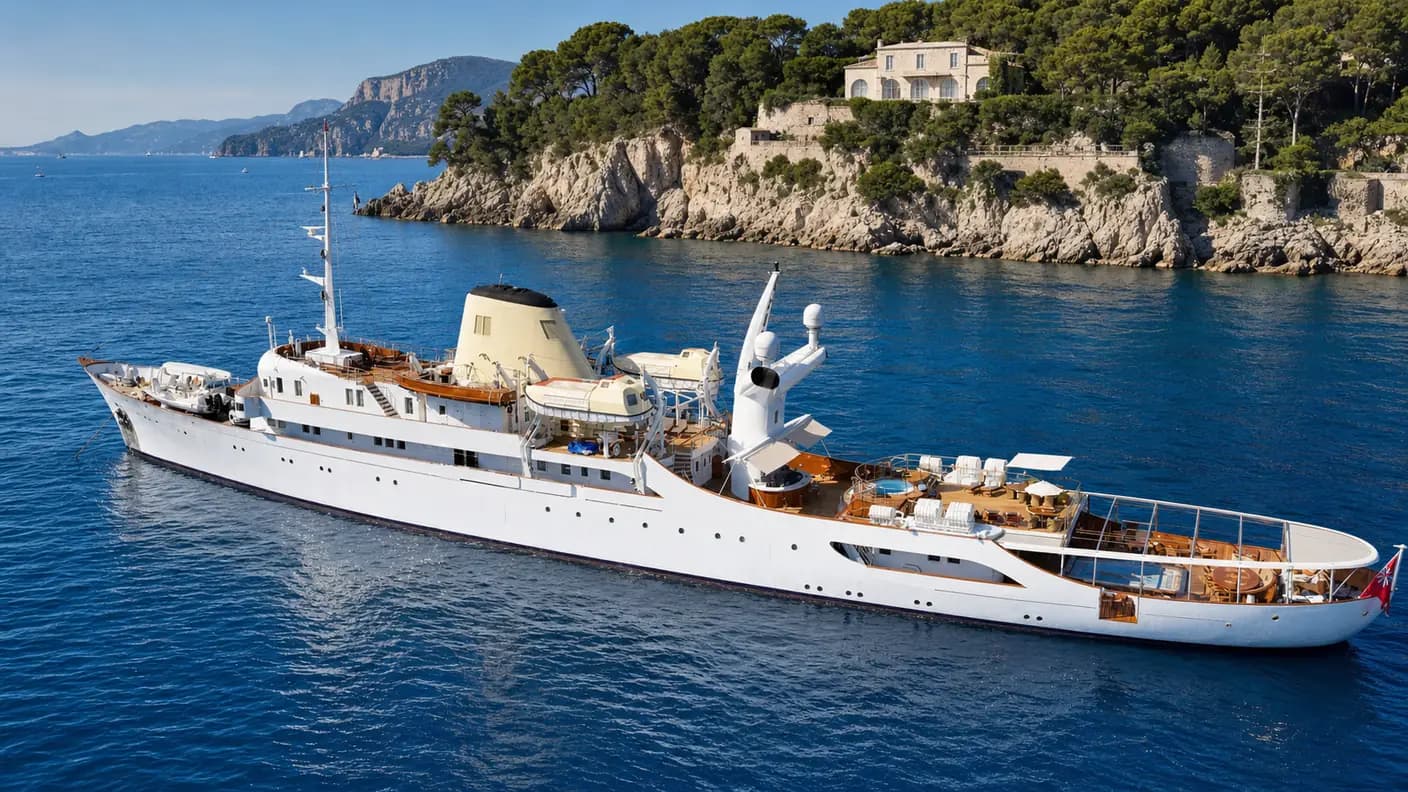
Christina O And The Birth Of The Modern Superyacht Idea
Calling Christina O one of the first postwar superyachts can be useful if the phrase is handled carefully. She was not the first large private yacht in history; the late nineteenth and early twentieth centuries produced many major steam and motor yachts. What Christina O helped establish was a postwar image of the superyacht as a highly visible social, political, and cultural platform tied to international wealth and Mediterranean mobility.
Her naval conversion gave her scale at a time when building an equivalent private yacht from scratch would have been a different proposition. Onassis used that scale to create a vessel that could host, impress, travel, and symbolize. In doing so, Christina O anticipated later yachts where size is not just about accommodation but about social choreography: multiple decks, guest circulation, formal and informal spaces, crew operations, tenders, and image control.
Modern superyachts often present themselves as private resorts, technological showcases, or design statements. Christina O operated differently, but the underlying idea is recognizable. She created a complete world at sea around an owner's identity. The yacht itself became a public symbol, and the people who came aboard amplified that symbol.
This is why Christina O still appears in lists of influential or iconic yachts. The vessel is not influential because every later yacht copied her shape. Most did not. She is influential because she showed what a very large private yacht could mean in the modern media age. She made the yacht legible as a social institution, not merely a mode of transport.
The distinction matters for readers comparing Christina O with contemporary yachts. A new 100-metre yacht may offer more interior volume, newer systems, larger glazing, beach clubs, and technical features unknown in the 1950s. Christina O's importance is not that she outperforms modern yachts in amenities. It is that she helped define the cultural category in which many of those yachts now operate.
Media, Film, And Continuing Cultural Use
Christina O's cultural life did not end with the Onassis era. The yacht has continued to appear in media, travel writing, yacht journalism, and film-related coverage. BOAT International has discussed her role in connection with Triangle of Sadness, the 2022 film that used a real yacht setting to explore wealth, service, and social hierarchy. The vessel has also been discussed in relation to later screen productions connected to Maria Callas and the Onassis world.
This continuing use is important because it shows how Christina O functions as an instantly readable object. A filmmaker or journalist does not need to explain every plank and system for the yacht to carry meaning. Her age, shape, name, and associations already signal old wealth, Mediterranean glamour, and twentieth-century history. That symbolic density makes the yacht attractive as a setting.
At the same time, media use can simplify the vessel. A film may need atmosphere more than accuracy. A travel feature may emphasize romance. A yacht profile may emphasize luxury. A reference page has a different responsibility. It should explain why the vessel has become useful to media without accepting every media image as a full account.
The continuing cultural use of Christina O reinforces her importance. Many yachts are famous for a season and then disappear into sale listings or private memory. Christina O remains recognizable across generations because she is connected to durable themes: war and peace, conversion and reinvention, Greek shipping power, celebrity, restoration, and the Mediterranean as social stage.
For Wikipedia-style external-link evaluation, this cultural continuity is relevant. A good Christina O reference should help readers understand why the yacht keeps returning in public narratives. It is not enough to say that famous people came aboard. The deeper explanation is that the yacht itself became a shorthand for a certain kind of twentieth-century maritime life.
How Christina O Differs From A Modern Charter Listing
Many pages about Christina O on the web are charter or brokerage pages. Those pages can be useful for current specifications, images, and operational status, but they often organize information around availability, amenities, and experience. A historical reference article has a different purpose. It should put the yacht's commercial present in context without allowing the present to define the whole vessel.
Christina O's value as a reference subject comes from her full chronology. A reader needs to know that she was HMCS Stormont before she was Christina. They need to understand the Onassis conversion and the yacht's role in postwar Mediterranean society. They need to know that later restoration changed the vessel again. A short charter listing cannot carry that weight because its job is usually to sell or describe current use.
This article therefore avoids booking language and commercial calls to action. It uses current yacht databases only where they support factual profile information, such as dimensions, construction, speed, accommodation, and refit context. It uses editorial sources for interpretation and official naval sources for the original ship history. That source mix is more useful for readers trying to understand the yacht as an encyclopedic subject.
The distinction also matters ethically. A yacht hosted on a commercial domain can still be presented as reference content if it separates research from sales. The page should not hide the host site's business context, but the article itself should be judged on whether it provides neutral, verifiable information. Christina O deserves that treatment because her public history is much richer than her current market or charter status.
Editors and readers should be able to leave the page with a clearer understanding of the vessel's identity. If the article only made the yacht seem desirable, it would fail as a reference. If it makes the yacht more intelligible as a wartime vessel, Onassis conversion, restored classic, and Mediterranean cultural object, it succeeds.
Evidence Limits
The public record for Christina O is strong in some areas and more complicated in others. The naval phase is well supported by Royal Canadian Navy history. The broad conversion narrative is supported by official summaries, yacht-industry reporting, and independent travel or maritime features. Modern specifications are available through BOAT International, YachtBuyer, and similar databases. These sources provide enough evidence to identify the yacht and explain her importance.
More caution is needed with private social history. Guest lists, onboard anecdotes, and quoted remarks often circulate through secondary accounts. Some are well reported; others are repeated because they fit the yacht's legend. This article avoids relying on private anecdotes as core evidence. It treats famous associations as part of cultural context, not as the main proof of significance.
Interior details should also be handled carefully. Ari's Bar, the pool, and other celebrated features are widely covered, but their exact materials, modifications, and present condition can vary across restoration phases and source dates. A statement that was accurate before one refit may need qualification after another. For that reason, this article emphasizes their symbolic and design significance rather than using them as a catalogue.
Technical details have similar limits. Modern yacht databases may disagree slightly on length, gross tonnage, crew count, or accommodation. These differences are common in large converted yachts. The article therefore uses approximate language when source variation is visible and points readers toward the references for exact current figures.
Finally, Christina O's Mediterranean relevance is interpretive but well grounded. The yacht's association with Onassis, Greek use, Riviera and Aegean society, and broader Mediterranean culture is central to the public record. The article does not claim a narrow Amalfi-specific history unless supported by a source. That restraint is important because regional relevance should not become invented locality.
Why Christina O Still Matters
Christina O still matters because she is one of the clearest examples of reinvention in yacht history. Few vessels move so visibly from wartime service to private luxury, from state utility to personal mythology, from decline risk to restoration, and from twentieth-century celebrity to twenty-first-century cultural use. Each transformation added a layer without completely erasing the previous one.
The yacht also matters because she helps explain the modern superyacht as a social form. Today, very large yachts are often discussed in terms of length, owner, designer, gross tonnage, and amenities. Christina O reminds readers that the superyacht idea also developed through narrative: who gathered aboard, what the yacht represented, how it moved through Mediterranean space, and how it translated maritime power into public image.
Her naval origin gives that story depth. Without HMCS Stormont, Christina O might be remembered only as an extravagant private yacht. With Stormont, the vessel becomes a case study in postwar transformation. The same steel hull that served a wartime purpose later carried a very different vision of peace, wealth, hospitality, and display. That contrast is historically powerful.
Her restoration gives the story continuity. If the yacht had disappeared, the Onassis era would survive mainly in photographs and memoirs. Because she remains an operational classic, modern readers can still encounter the physical object, even if much has been repaired, rebuilt, or reinterpreted. That living status makes her more complicated and more valuable as a reference subject.
Most of all, Christina O matters because she cannot be reduced to a single category. She is not just a former warship, not just an Onassis yacht, not just a classic charter vessel, not just a film setting, and not just a famous guest list. She is the rare vessel in which all of those categories meet. That is why a careful, sourced article remains useful.
Source Notes
The Royal Canadian Navy source is the foundation for the vessel's original identity as HMCS Stormont. It supports the builder, launch and commissioning chronology, wartime service outline, battle honours, postwar disposal, conversion period, and the later Greek Navy and commercial sale notes. For the naval phase, it is stronger than most yacht-industry summaries because it comes from an official military-history source.
BOAT International and YachtBuyer provide useful yacht-industry database support for the modern vessel. They help with current or recent length, beam, speed, accommodation, hull material, and design associations. Because these databases are updated and may reflect current market or fleet information, readers should check the linked profiles when exact current figures are important.
BOAT International's long-form historical reporting is especially useful for the restoration and cultural interpretation of Christina O. It helps explain the difficulty of returning the yacht to service and the tension between preserving Onassis-era atmosphere and meeting modern expectations. That kind of source is useful because it goes beyond raw specifications.
YachtBuyer and other industry profiles are secondary support rather than primary evidence. They help confirm current market visibility, modern specification language, and the persistence of the yacht's public reputation. They should not replace the Royal Canadian Navy source for wartime facts or specialist historical reporting for interpretive claims.
The references below are included so readers can verify the key claims quickly. They are intentionally visible and external. This page does not rely on Wikipedia as a factual source for the article, although it may be relevant as the place where readers encounter Christina O in an encyclopedic context.
Frequently Asked Questions
Was Christina O originally a warship? Yes. The vessel was originally HMCS Stormont (K327), a Royal Canadian Navy River-class frigate built by Canadian Vickers in Montreal and commissioned in 1943. She later became Christina after conversion into a private yacht associated with Aristotle Onassis.
How long is Christina O? Modern yacht-industry sources generally list her at about 99.1 metres. Exact figures vary slightly by source, commonly appearing around 99.13m, 99.14m, or 99.15m. The variation is small and reflects measurement and database conventions rather than a major factual conflict.
Why is Christina O historically important? She is important because she connects Second World War naval history, Onassis-era Mediterranean society, the emergence of the postwar superyacht as a public symbol, and later classic-yacht restoration. Her significance is cultural and maritime, not only decorative.
Is Christina O an Amalfi Coast yacht? Not specifically in the narrow historical sense. Her connection is to the wider Mediterranean world, especially Greek and Riviera society. She is relevant to Amalfi readers because she helps explain the regional yacht culture that shaped Mediterranean luxury at sea.
Can Christina O be described as the first superyacht? It is safer to describe her as one of the defining postwar superyachts rather than the first superyacht in an absolute sense. Large private yachts existed before her, but Christina O helped define the modern public image of the superyacht after the Second World War.
References
This page is intended as a neutral yacht reference. Readers should verify exact current specifications against the linked database, registry, and editorial sources when precision is required.